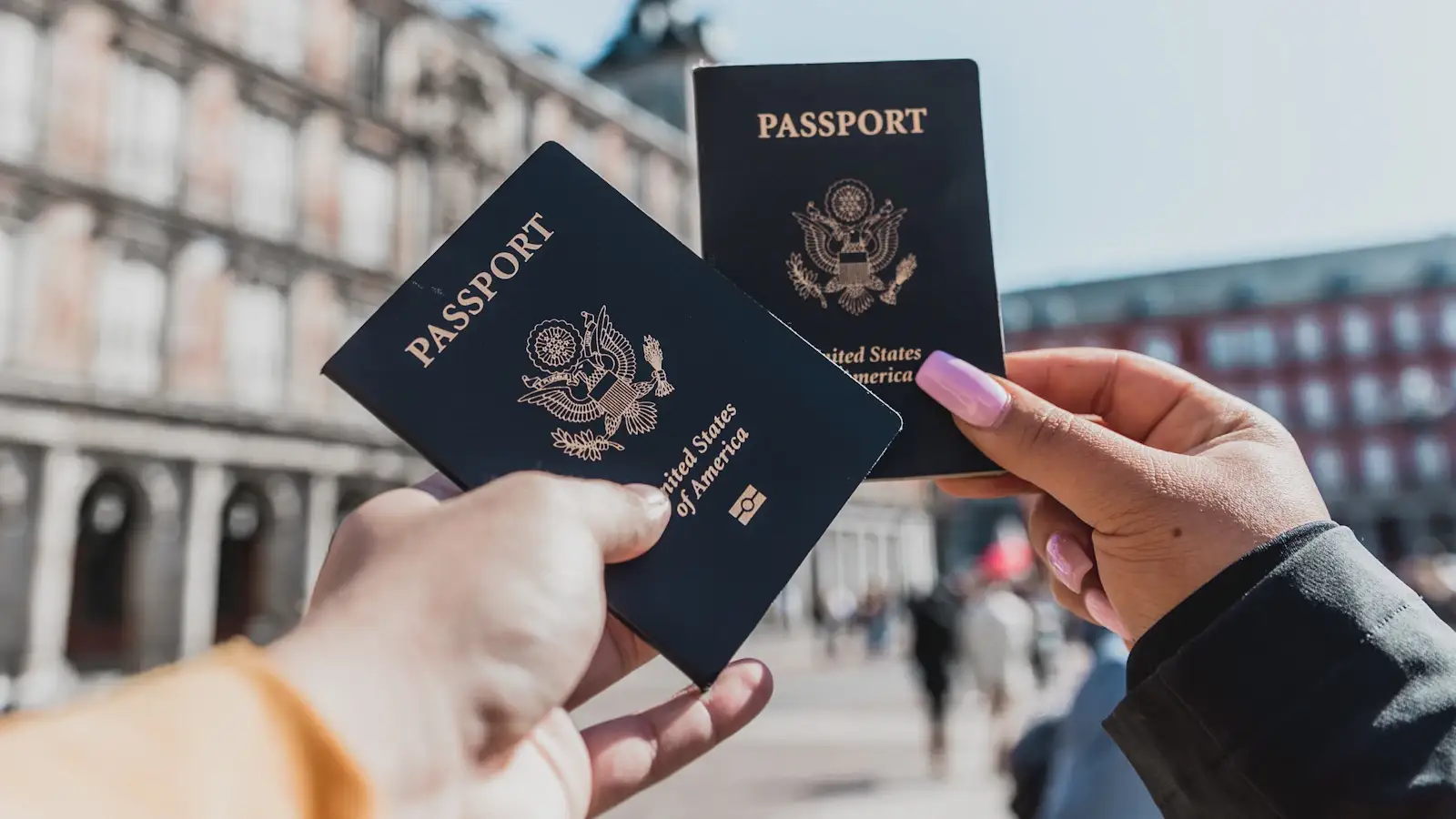
Losing your passport anywhere is bad. Losing it in China, where your passport is not just your ID but your hotel key, your train ticket, your payment verification, and your permission to be in the country —that is a different category of problem.
I will walk you through exactly what happens, step by step, in the order you need to do it. No filler. Just the sequence that gets you from “my passport is gone” to “I am on a plane home” with the fewest surprises.
Step 1: File a Police Report (30-60 minutes, free)
Go to the nearest local police station, usually called a paichusuo, in the specific district where you believe the passport was lost or stolen. This matters. Chinese police stations operate on strict geographic jurisdiction. If you lost your passport near the Bund in Shanghai but you walk into a police station in Jing’an district, they will politely redirect you to the Huangpu district station that covers the Bund area.
You do not need to speak Chinese for this step, but it helps enormously. Show the officer your phone with this text:
My passport is lost. I need a police report receipt for my embassy and the Exit-Entry Administration. “I lost my passport and need a police report receipt.” “I lost my passport and need a police report receipt.”
The officer will ask: when, where, and under what circumstances. If it was stolen, say so —theft reports are treated differently from loss reports, and your travel insurance may require a theft report specifically for claims. If you are not sure whether it was lost or stolen, say lost. A theft report triggers a more involved process and you will spend an extra hour at the station.
You will receive a stamped police report receipt, often referred to as a baoan huizhi. This is the most important piece of paper you will hold until you get a replacement passport. Make three photocopies immediately —most police stations have a copy machine, but some require a small fee (RMB 1-2 per page). You will need copies for the embassy, the hotel, and the Exit-Entry bureau.
One cultural note that surprises visitors: Chinese police stations are neighborhood institutions, not intimidating headquarters. They handle everything from lost dogs to noisy neighbor complaints. Walking in to report a lost passport is completely routine for them. You are not in trouble. Nobody suspects you of anything. The officers will likely be patient and methodical, though they will use a translation app to communicate if you do not speak Chinese.
Step 2: Get Passport Photos (RMB 20-60, 15 minutes)
Before going to your embassy, get passport photos taken. Embassies almost always require physical photos for emergency document applications, and finding a photo studio near the embassy is harder than finding one near any commercial street.
Look for a photo studio. Tell them:
Passport photos, white background. “Passport photos, white background.” “Passport photos, white background.”
China’s standard passport photo size is 33mm x 48mm, which matches most international requirements. Get at least four copies. The cost is RMB 20-60 for a set of four, printed in 10 minutes.
Many cities also have self-service photo booths inside subway stations and shopping malls. They print passport-sized photos for RMB 15-35 and have English menu options. The quality is lower but acceptable for emergency documents.
Step 3: Visit Your Embassy or Consulate (2-3 business days, RMB 300-1,200)
This is the step where nationality determines your experience. Here are the key locations and typical timelines:
Beijing. Most countries maintain their main embassy in the Sanlitun or Liangmaqiao diplomatic districts. US Embassy: No. 55 Anjialou Road, Chaoyang District. UK Embassy: 11 Guanghua Road. Australian Embassy: 21 Dongzhimenwai Dajie. These embassies handle the highest volume of emergency passport cases and typically have the fastest turnaround —1-2 business days for major Western countries.
Shanghai. Consulates are concentrated in Jing’an and Huangpu districts. US Consulate: 1468 Huaihai Middle Road (appointment required, book online). UK Consulate: 17F, Garden Square, 968 Beijing West Road. Most Shanghai consulates process emergency documents in 2-3 business days.
Guangzhou. Consulates cluster in Tianhe District, around Zhujiang New Town. US Consulate: 43 Huajiu Road. Processing times are similar to Shanghai.
Chengdu, Shenyang, Kunming. These cities have some consulates but with more limited services. If your country has only a consulate here and not in Beijing or Shanghai, expect longer processing —5-7 business days is common. Call ahead. Some smaller consulates require appointments for emergency documents and are not equipped for walk-in emergencies.
The fee for an emergency passport or temporary travel document varies by country. US citizens pay US$165 (about RMB 1,200). UK emergency travel documents cost GBP 100 (about RMB 920). French temporary passports cost EUR 45 (about RMB 350). Most embassies accept payment by credit card or in local currency. Bring cash in RMB just in case —embassy card machines occasionally fail, and you do not want to make a second trip.
What to bring to the embassy: police report (报案回执, police report receipt), passport photos, any other ID you still have (driver’s license, national ID card, photocopy of your lost passport if you made one), and proof of your travel itinerary if available. The more documentation you present, the faster the verification process.
Step 4: Apply for an Exit Visa at the Exit-Entry Administration (3-5 business days, RMB 160)
Getting an emergency passport from your embassy lets you prove who you are. It does not give you permission to be in China. Your original Chinese visa was attached to your lost passport, and the visa number no longer matches.
You must go to the Exit-Entry Administration Bureau —Exit-Entry Administration Bureau —of the city where you are staying. Every major Chinese city has one. In Beijing, it is at 2 Andingmen Dongdajie. In Shanghai, the main office is at 1500 Minsheng Road in Pudong. In Guangzhou, it is at 155 Jiefang South Road.
Bring: your new emergency travel document, the police report (报案回执, police report receipt), passport photos, a completed application form (available at the office), and RMB 160 for the visa fee. Processing takes 3-5 business days.
The visa you receive is typically a tingliu zhengjian (stay permit) —a stay permit —valid for 15-30 days, giving you enough time to wrap up your trip and leave. It is not a full replacement visa, and it does not extend your original stay beyond what is reasonable. If you were scheduled to leave in 3 days, expect a 7-10 day permit. If you had 3 weeks left on your trip, a 30-day permit is standard.
A note on timing: the Exit-Entry bureau and your embassy operate independently. You can —and should —start the exit visa process as soon as you have your embassy-issued document, even if your original departure date has not passed. Waiting until your scheduled flight date to begin this process is the most common mistake travelers make, and it adds 3-5 unnecessary days stuck in China.
Step 5: Manage the Waiting Period
You now have 3-5 days with no passport, no original visa, and possibly no valid hotel registration. Here is how to handle it:
Hotels. If you are already checked in, inform the front desk. Provide the police report. Most chain hotels (Marriott, Hilton, InterContinental) have protocols for this and will keep you registered. Smaller guesthouses and hostels may be less familiar with the process. If the hotel refuses to keep you, larger international chain hotels are your fallback —they deal with lost-passport situations regularly.
Domestic travel during the wait. You cannot fly. Airlines require passport or Chinese ID at check-in. High-speed rail is inconsistent —some station staff accept the police report plus a photocopy of your lost passport, others will not. Long-distance buses and taxis are your only reliable options for moving between cities while waiting for documents.
Money. If you have Alipay or WeChat Pay set up, you are fine —these work independently of your passport. If you were relying on cash and your emergency cash is running low, Western Union and MoneyGram have locations in most major Chinese cities. You will need your emergency passport as ID to receive a transfer. Do not let your cash run to zero during the waiting period —the Exit-Entry bureau only accepts cash or Chinese bank cards, not international credit cards.
Food and communication. Food delivery via Meituan (Meituan) and Ele.me (Ele.me works as long as your phone is functional. Translation apps continue to work. The wait is stressful but logistically manageable if you are in a major city.
Real Cases and What They Cost
Case 1: US traveler, Beijing. Passport stolen from a cafe in Nanluoguxiang. Police report at Dongcheng district station: 45 minutes, free. US Embassy emergency passport: 2 business days, RMB 1,200. Photos: RMB 30. Exit-Entry permit: 4 business days, RMB 160. Extra hotel nights: 5 nights at RMB 400/night = RMB 2,000. Taxis between offices: RMB 300. Total: RMB 3,690 plus 6 extra days in Beijing.
Case 2: German traveler, Yangshuo. Passport lost while cycling between Yangshuo and Xingping. Police report at Yangshuo station: 40 minutes, free. Had to travel to Guangzhou (6 hours by private car, RMB 800) because the nearest German consulate is there. German consulate emergency passport: 5 business days, RMB 450. Exit-Entry permit in Guangzhou: 3 business days, RMB 160. Extra hotel nights: 8 nights, RMB 2,400. Total: RMB 3,810 plus disrupted itinerary.
Case 3: Australian traveler, Shanghai. Passport left in a taxi. Driver returned it to the hotel 4 hours later after the traveler called Didi customer service, which contacted the driver through the trip record. Cost: RMB 0. Stress: high. Lesson: always take a photo of your taxi license plate or use Didi so there is a trip record. A street-hailed taxi with no record makes recovery nearly impossible.
The Yangshuo case illustrates why location matters enormously. Losing your passport in a big city with your country’s consulate is an inconvenience. Losing it in a rural area without a consulate is a major disruption that adds days of travel and hundreds in transport costs just to reach the embassy.
Quick Reference: Lost Passport in China
- File a police report at the station in the district where it happened. Get the stamped 报案回执 police report receipt. This is your key document for every subsequent step. Free, 30-60 minutes.
- Make 3 photocopies of the police report. You will need copies for the embassy, hotel, and Exit-Entry bureau. Chain hotels and convenience stores like FamilyMart (FamilyMart) have copy machines for RMB 1-2 per page.
- Get passport photos before going to the embassy. 33mm x 48mm, white background. RMB 20-60 for four copies at any 照相馆 (photo studio).
- Check your embassy’s website for emergency passport requirements and hours. Some require appointments. Most are closed on weekends and Chinese public holidays. The US, UK, and Australian embassies list emergency contact numbers on their websites.
- After receiving your emergency passport, go immediately to the Exit-Entry Administration for a stay visa (RMB 160, 3-5 business days). Do not wait until your scheduled departure date. You cannot leave China without this.
- Keep RMB 2,000-5,000 in accessible funds. Between embassy fees, visa fees, extra hotel nights, and transport between offices, losing your passport costs real money even if your travel insurance covers the document replacement.
- Use ride-hailing apps (Didi) instead of street-hailing taxis. If you leave something in a Didi, you can contact the driver through the trip record. A street taxi with no record means your belongings are almost certainly gone.
Read next: China Visa-Free Entry and Transit Guide 2026 explains what visa rules apply and how to avoid overstay problems after you get your replacement documents. First 24 Hours in China: Arrival Checklist covers the practical steps that prevent emergencies —including making a passport photocopy the moment you check into your hotel.
Planning your trip?
china survival kit —Full-screen translation cards and checklists for your trip.
best time to visit china —Check weather and crowds by city and month.
Next Step: Add This to Your Arrival Checklist
This is just one of the essentials to prepare before traveling to China. To ensure your trip is perfectly smooth, be sure to check our 14-Day Arrival Checklist, covering complete steps for visa, payment, internet, and transport setups.
Loading comments...