China’s high-speed rail is the easiest way to move between many Chinese cities, but the first ride can feel more complicated than the train itself. The train is not the hard part. The hard part is knowing which app to trust, how your passport works in the ticketing system, why a station called “Beijing South” is nowhere near “Beijing Railway Station”, and what to do when the automatic gate refuses to read your document.
This guide is written for a foreign visitor taking a G, D, or C train in mainland China in 2026. It covers the full flow: registering on 12306, choosing a seat, arriving at the station, reading the Chinese signs, boarding with your passport, and staying comfortable once the train is moving.
If you are still comparing booking channels, read this together with our separate 12306 booking guide and China train station guide.
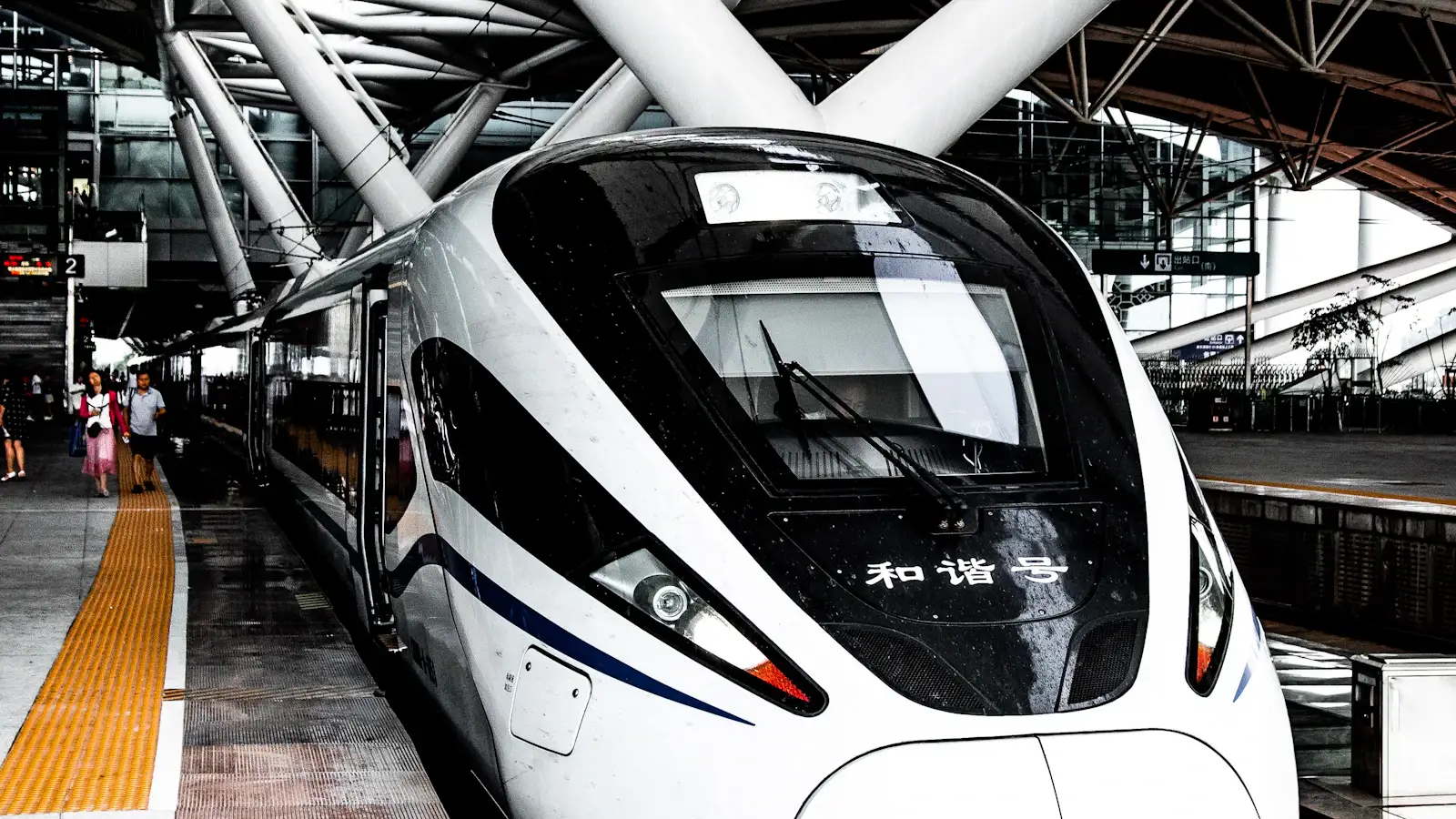
High-speed rail photos and boarding flow
Use these three views to recognize the journey: the train exterior, the cabin, and the station platform before boarding.


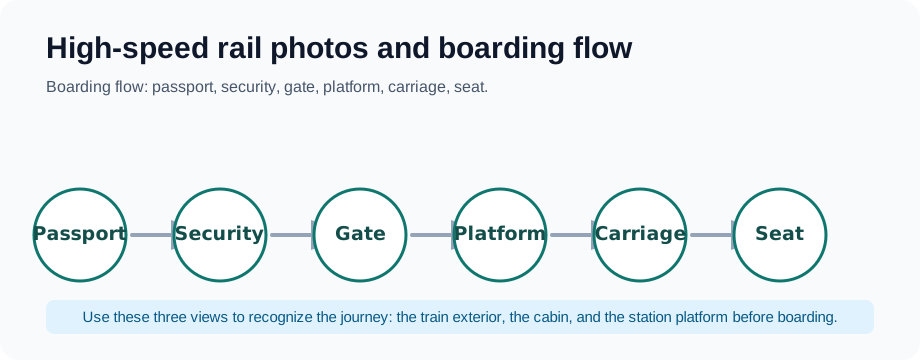
Boarding flow: passport, security, gate, platform, carriage, seat.
First, Understand What 12306 Is
12306 is the official China Railway ticketing system. The website is 12306.cn, and the app is usually listed as China Railway 12306 or Railway 12306. It is the direct source of tickets, so there is no agency markup. The English 12306 platform is designed for foreign passport holders, while the Chinese version also serves Chinese ID card holders and other document types.
You can also book through Trip.com and other travel platforms. They can be easier if your card fails or you want English-language support. The ticket itself still comes from the railway system and is tied to your passport.
As of July 2026, normal train tickets are commonly sold up to 15 days before departure. Holiday periods are different in practice, because the good trains disappear quickly. If you are traveling around Spring Festival, Labor Day in early May, National Day in early October, or a Friday evening on a popular route, book as soon as your date opens.
How to Register on 12306 with a Foreign Passport
Do this before you need the ticket. Do not leave 12306 registration for the taxi ride to the station.
Download the official app or open the English 12306 website. Start registration, choose the passport option as your ID document type, and enter your name, nationality, passport number, date of birth, and contact details. Enter your name exactly as it appears on your passport bio page. If your passport shows a middle name, include it. If the form separates surname and given name, do not improvise a nickname or shortened version.
For contact information, 12306 may accept email or a mobile number, depending on the current registration path and region shown in the app. If you use email, look for the activation message from the railway system and complete the link. If you use a phone number, complete the SMS code step.
After registration, the account needs real-name identity verification. Some passport holders pass automatically. Others need to upload a photo of the passport information page, and sometimes a photo of the traveler holding it. If verification fails, check the spelling, passport number, nationality, and date format first. If it still fails, complete verification at a staffed station ticket counter with your passport.
The important rule is simple: you cannot reliably buy and use tickets until identity verification is complete. Set up the account a few days before your first train ride, especially if you are entering China during a busy travel week.
Booking: The Cleanest Way to Avoid Trouble
Search by city, but pay attention to station names. Big Chinese cities often have several stations. “Beijing South” is not “Beijing Railway Station”. “Shanghai Hongqiao” is next to Hongqiao Airport, while “Shanghai Railway Station” is a different place. “Guangzhou South” and “Guangzhou East” are not interchangeable. Always map the exact station before paying.
High-speed trains are usually marked with letters:
- G trains are the fastest high-speed services.
- D trains are also fast, often slightly slower or with more stops.
- C trains are intercity high-speed services, common around city clusters.
Choose the train, add the passenger, confirm the passport details, choose a seat class, and pay before the countdown expires. Foreign Visa and Mastercard cards may work directly, but bank declines still happen. Alipay or WeChat Pay linked to a foreign card can be a useful backup. Screenshot the order page showing train number, date, stations, departure time, carriage, and seat.
Seat Classes: Second, First, and Business
Second Class is the default choice. Seats are usually arranged 3+2 across the carriage. They are clean, numbered, and comfortable enough for most trips. For routes under four or five hours, Second Class is usually the best value.
First Class is arranged 2+2. You get a wider seat, more legroom, less crowding, and a calmer carriage. It is useful on longer daytime trips or when you need to work.
Business Class is the premium option. On many G trains it has large reclining seats, a quieter carriage, and a more airline-like feel. It can be excellent on long routes, but the price jump is real. Business Class is comfort, not necessity.
You may also see terms like “Premier”, “VIP”, or sleeper categories on some routes. For a first high-speed rail trip, ignore the edge cases unless the app clearly shows that the train you want uses them.
Paper Tickets, Receipts, and Passport Boarding
For normal travel, you do not need to collect a paper ticket. China Railway uses e-tickets tied to the identity document used during booking. For you, that document is your passport.
At the station entrance and boarding gate, try scanning the passport data page at the reader if the lane shows passport support. If it does not work, use the manual lane. Staff may scan your passport, check the order in the system, or look at your booking confirmation. This is routine. Do not panic because the automatic gate rejected you; many foreign visitors use the staffed gate.
One exception: if you need a reimbursement receipt, you can request one separately at a station counter or supported machine. A receipt is not the same thing as a boarding ticket. Do not print one before travel unless you know the refund and change rules, because printed receipts can make changes more annoying.
At the Station: The Route from Door to Train
Chinese high-speed rail stations work more like small airports than subway stations. You enter, pass security, wait in a hall, then go down or up to the platform only after boarding opens.
Here is the normal flow:
- Arrive at the correct station. Check the Chinese name and the English name. If your ticket says Beijingnan, that means Beijing South, not Beijing Railway Station.
- Enter through the departure entrance. Large stations may have different entrance zones, but any departure entrance usually leads to security.
- Put bags through the X-ray machine. You walk through a metal detector. Liquids are usually allowed, but flammable sprays, knives, and certain large batteries or tools can be a problem.
- Find the main departure board. Match your train number, not just the destination, because several trains may go to the same city.
- Go to the waiting area or gate listed for your train.
- When boarding opens, scan your passport or use the manual lane.
- Go to the platform, find your carriage number, then your seat.
Boarding often opens about 15 to 20 minutes before departure and closes a few minutes before the train leaves. Staff do not treat departure time as a suggestion. If your train leaves at 09:00, reaching the gate at 08:59 is too late.
Chinese Station Signs You Actually Need
Most major stations have English signs, but not every useful word is translated. These are worth recognizing:
- 进站: station entrance / enter the station
- 出站: exit
- 候车室: waiting hall
- 检票口: ticket check gate
- 站台: platform
- 车厢: carriage / coach
- 座位: seat
- 开车时间: departure time
- 到达: arrival
- 始发: starts from this station
- 终到: terminates at this station
- 正点: on time
- 晚点: delayed
- 停止检票: ticket check closed
- 改签: change ticket
- 退票: refund ticket
- 人工通道: manual lane
- 服务台: service desk
- 卫生间: toilet
- 热水: hot water
Your train number is your anchor. A board may show “G1234 上海虹桥 12:20 检票口 A12”. That means train G1234 to Shanghai Hongqiao, departing at 12:20, boarding at gate A12.
On the Train: Luggage, Charging, Food, and Etiquette
For luggage, think train luggage rather than airline luggage. A normal suitcase goes on the overhead rack if it fits. Larger suitcases go in the luggage space near the carriage doors or between some seat backs. Keep valuables with you. If you have a very large case, board early so you are not hunting for space while everyone is trying to sit down.
Charging is usually available, but not always where you expect. Newer high-speed trains often have sockets under or near the seat, sometimes with USB ports. Older carriages may have fewer outlets. Bring a small power bank, especially if your phone is also your map, translator, payment tool, and hotel address.
Food is easy enough. Many trains sell boxed meals, snacks, coffee, tea, and bottled drinks from a trolley or dining car, but quality varies. Stations usually have better food before boarding. A practical move is to buy water and a simple meal after security.
Hot water is common on Chinese trains. You will see passengers filling tea bottles or instant noodle cups from a dispenser between carriages. The water is very hot, and the train moves, so do not fill a flimsy cup to the brim.
Noise standards are better than they used to be, but carriages are not silent. Phone calls, videos, children, and snack smells happen. Use headphones, keep your own volume low, and avoid putting bags in the aisle. Smoking is banned on high-speed trains, including between carriages and in toilets. The smoke alarms are taken seriously.
Common Mistakes Foreign Travelers Make
The biggest mistake is booking the wrong station. In China, the station suffix matters. South, West, North, East, airport, and central stations can be far apart. Check the station in a map app before paying and again before leaving your hotel.
The second mistake is entering passport details casually. A missing middle name, reversed name order, or one wrong digit can turn into a counter visit. The passport you used to book must be the passport you bring.
The third mistake is arriving like it is a European platform station. Chinese stations have security, big waiting halls, and gate checks. Leave more time than you think you need for the first trip.
The fourth mistake is standing at the wrong gate because the destination looks familiar. Always match the train number. A station board may show many trains to Shanghai, Xi’an, Guangzhou, or Chengdu on the same morning.
The fifth mistake is assuming every automatic gate accepts every passport. If the gate does not open, step aside and use the manual lane. Holding up the automatic lane while repeatedly scanning the same passport only makes the moment worse.
The sixth mistake is relying on station Wi-Fi. Have your booking screenshot offline. Have your hotel address and destination address saved. If your phone signal drops inside a huge station, you still need the basics.
A Simple First-Ride Checklist
Before travel day, register on 12306, complete passport verification, and confirm the exact departure station. On travel day, bring the same passport, screenshot your booking, arrive 45 to 60 minutes early, buy water after security, and follow the train number to the gate. At boarding, scan your passport if the gate supports it; otherwise use the manual lane.
Once you have done it once, China’s high-speed rail becomes straightforward. The system is strict, but it is logical. Book with the right passport, go to the right station, follow the train number, and give yourself enough time. That is most of the battle.
Next Step: Add This to Your Arrival Checklist
This is just one of the essentials to prepare before traveling to China. To ensure your trip is perfectly smooth, be sure to check our 14-Day Arrival Checklist, covering complete steps for visa, payment, internet, and transport setups.
Loading comments...